













- From the Blog
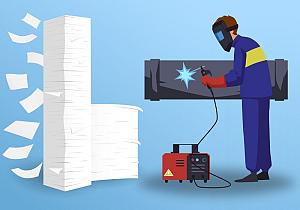
The impact of sine and square waves in aluminum AC welding, Part I

- By Gina Cutts
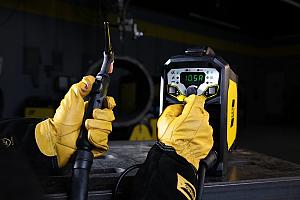
When welding aluminum, welders use alternating current (AC) and primarily one of two waveforms, sine and square wave. Gina Cutts shares more about the former in her latest Aluminum Etc.



Exclusive to Members
- From the Fabrinomics Newsletter

Dynamic Pricing Affects the Energy World
The energy sector is always volatile and lively. There are economic motivators as well as geopolitics, government mandates, and weather. Fuel is the ultimate inelastic good; its price has very little to do with short-term demand. If the price of gas at the pump changes, the consumer doesn’t react much. How can they? They grumble …



Fabrinomics® is an official publication of the Fabricators and Manufacturers Association and is available exclusively for members. Join FMA.
-

- From The Fabricator


- Industry News
- Wheel line expanded to accommodate heavy-duty industries
- Protomet to expand manufacturing presence in Tennessee
- International Pipe announces asset purchase of Big Bear Pipe & Steel
- BLM GROUP appoints Intermountain regional manager
- Gema welcomes controller
- 3D laser tube cutting system available in 3, 4, or 5 kW
- Hyster recognizes Dealers of Distinction for 2023
- ESAB unveils Texas facility renovation
- Hess Ornamental Iron expands capabilities with new Pennsylvania headquarters
- Corrosion-inhibiting coating can be peeled off after use
- Podcasting

In this episode of The Fabricator Podcast, Caleb Chamberlain, co-founder and CEO of OSH Cut, discusses his company’s...
- Latest from Our Publications

-
- From The Fabricator
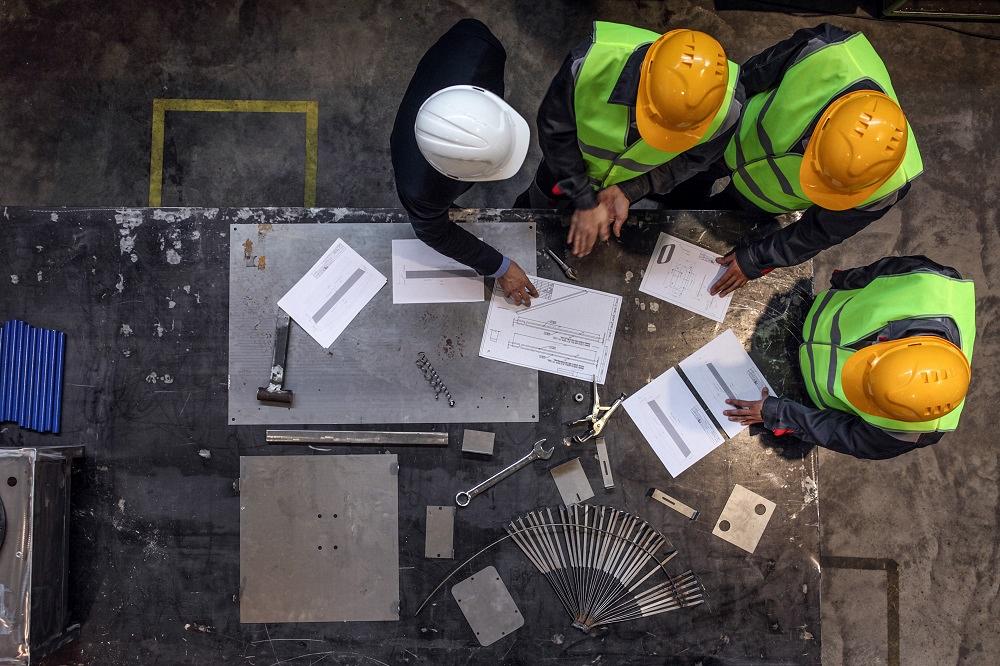
Metal fabrication management: A guide for new supervisors
Skilled people in the shop underwent significant training and mentoring to become as good as they are. The same should hold true for shop supervisors.
ICM opens Colorado pipe fabrication shop
Industrial Constructors/Managers Inc. (ICM) has opened a steel fabrication facility next to its Pueblo, Colo., office that gives the company a dedicated space to expand its pipe fabricating capacity, reports Mile High CRE.
-
- From The Fabricator
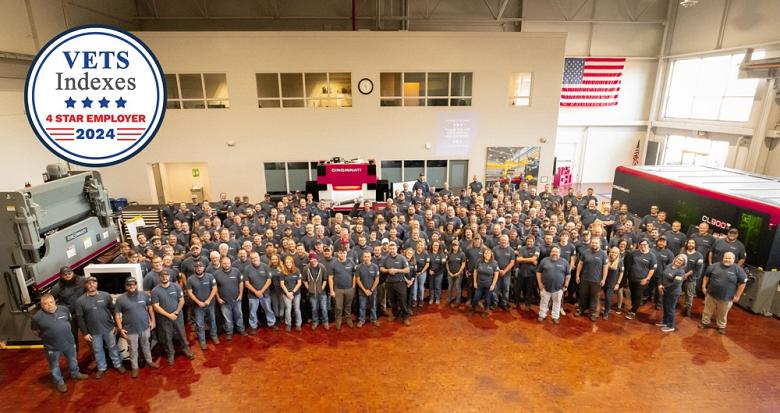
Cincinnati named 2024 Vets Indexes 4 Star Employer
Vets Indexes has announced that Cincinnati Incorporated has earned the designation of 2024 Vets Indexes 4 Star Employer.
National Tube Supply names VP of operations
University Park, Ill.-based National Tube Supply, a supplier of mechanical tube and chrome bar, has hired Jim Morton as vice president of operations.
-
- From The Fabricator
McAfee Tool & Die redesigns website
McAfee Tool & Die Inc., a provider of tooling and manufacturing services in Uniontown, Ohio, has unveiled a revamped website highlighting its core services of CNC machining, laser cutting, wire EDM cutting, and grinding.
-
- From The Fabricator
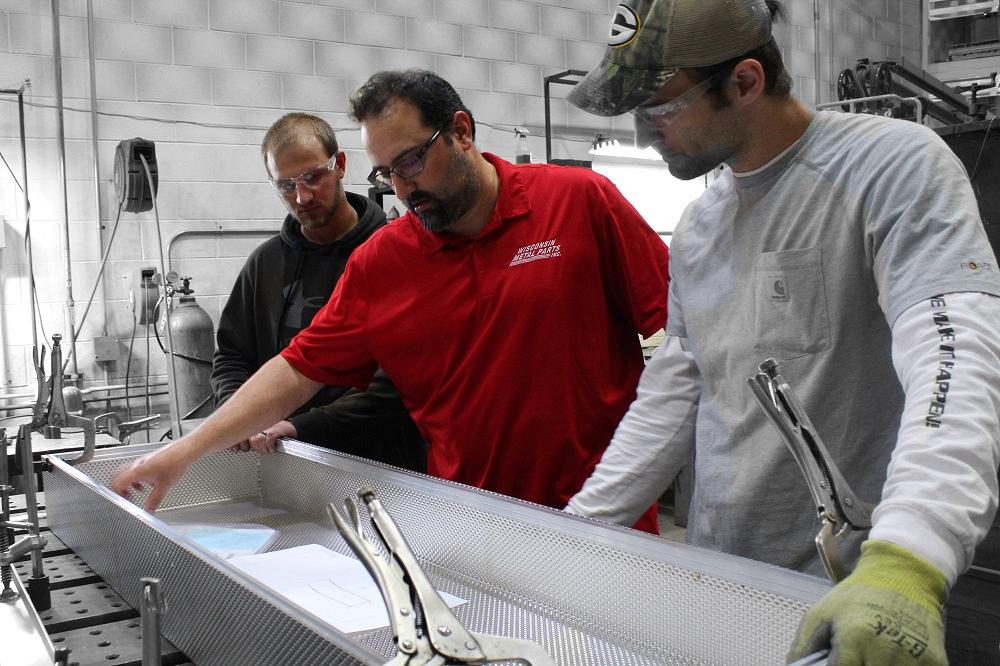
SOLV Metals seeks growth through collaboration
Formed in 2023, SOLV Metals represents the merger of three industry players: Wisconsin Metal Parts, Lean Manufacturing Products, and QuikCut. The story reveals the subtle nature of consolidation in metal fabrication.
-
- From The Fabricator
DeWys Stainless Solutions moving to stand-alone facility
DeWys Stainless Solutions (DSS), a division of DeWys Metal Solutions, is moving out of DeWys’ main site in Marne, Mich., into a stand-alone facility.
-
- From The Fabricator
White Cap acquires Crimson Steel Supply
White Cap, a distributor of construction supplies and safety products for professional contractors, has acquired Oklahoma-based Crimson Steel Supply LLC.
-
- From The Fabricator
Yoe Construction adds second Pennsylvania location
Yoe Construction has announced the addition of a new steel fabrication shop in Red Lion, Pa.
-

- From The Welder
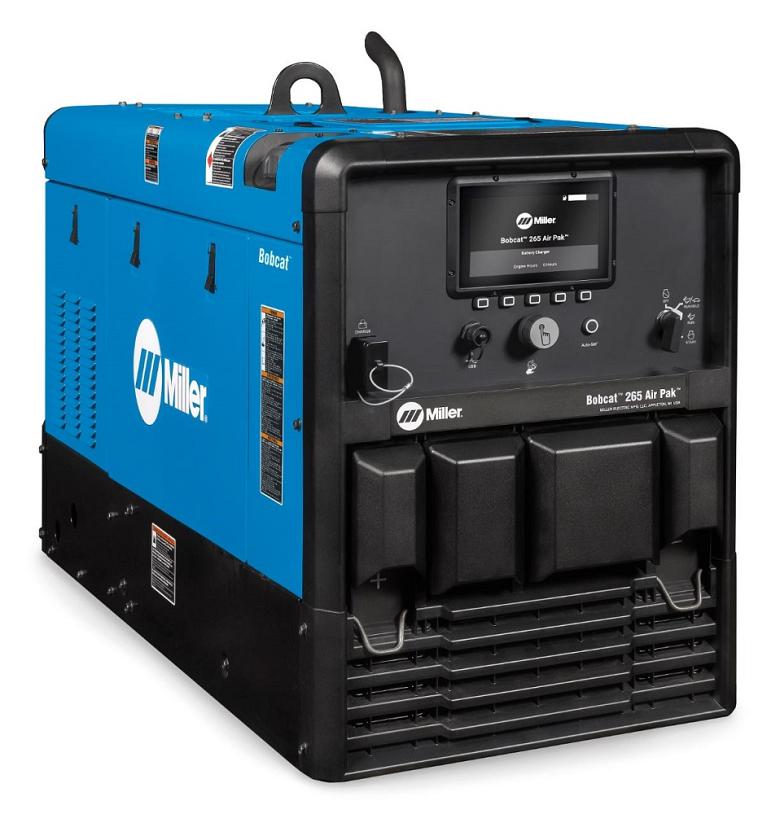
Engine-driven welding machines include integrated air compressors
Miller Electric Mfg. LLC has released the Bobcat 265 Air Pak and Trailblazer 330 Air Pak engine-driven welding machines with integrated industrial rotary-screw air compressors. The compact all-in-one machines also offer multiprocess weld quality, auxiliary power, and battery charge/crank assist for...
-
- From The Fabricator
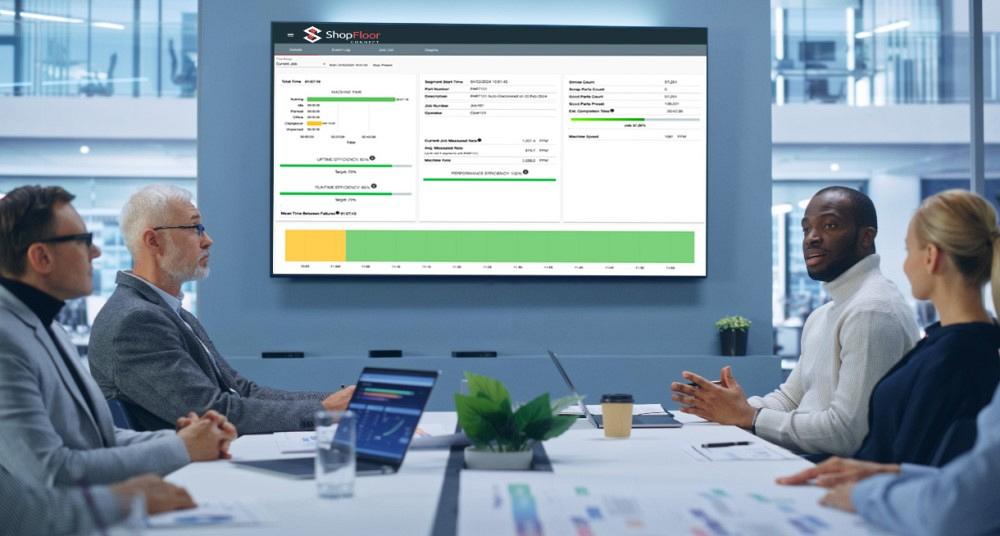
Is it time to invest in new fabricating equipment?
Production tracking software provides broad visibility into the overall production process and offers an overview of equipment utilization.
Sponsored Content
Economical, High-Performance Automation
Mazak’s SMART CELL robotic sorting system is compatible with Mazak’s flat sheet laser-cutting machines and can be integrated as a standalone solution or with automated storage towers for continuous production. Discover more.
-
- From The Welder
Tulsa Welding School marks 75th anniversary
Tulsa Welding School (TWS) marked its 75th anniversary with a campus event on April 5 for current and past students, faculty, and local dignitaries.
-
- From The Fabricator
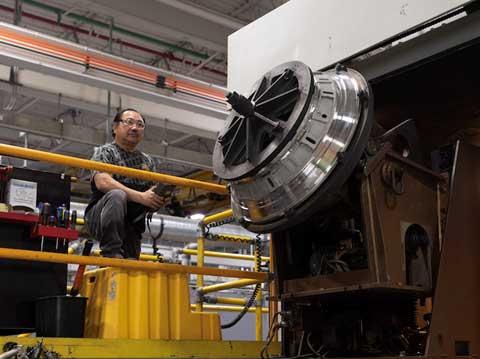
Barnes Aerospace expands MRO facility
Barnes Aerospace has completed the expansion of its maintenance, repair, and overhaul facility in East Granby, Conn.
-
- From The Fabricator
Verisurf and Hexagon partner on metrology systems
Verisurf Software Inc. and Hexagon Manufacturing Intelligence have entered an agreement under which Verisurf will offer complete metrology systems.
subscribe now
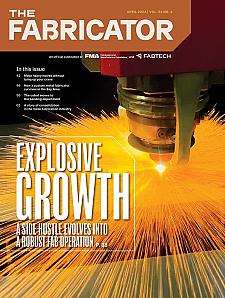
The Fabricator is North America's leading magazine for the metal forming and fabricating industry. The magazine delivers the news, technical articles, and case histories that enable fabricators to do their jobs more efficiently. The Fabricator has served the industry since 1970.
start your free subscription